
πŸ’½ Data Sample

dbdiagramdbdocs

Great news! We're introducing Data Sample β€” a feature that lets you add example data rows directly alongside your table definitions in DBML. Now your diagrams can show not just schema, but actual data, making them far more meaningful and useful for team communication.

Here's a simple DBML example:

Table plans {
id int [pk]
name varchar
price decimal

// define inside table definition with implicit column list
Records {
1, 'Free', 0
2, 'Pro', 8
3, 'Team', 15
}
}

// OR define outside table definition
Records plans(id, name, price) {
1, 'Free', 0
2, 'Pro', 8
3, 'Team', 15
}

Define sample data right in DBML, and your diagram instantly comes alive. You can import SQL INSERT INTO statements to auto-populate records, view them in the diagram with a single click, and export back to SQL for database seeding. This keeps your reference data and schema definitions in perfect sync across docs and deployment.


Why it matters:

  • Your diagrams explain themselves β€” team members see actual data shapes and values, not just column definitions.
  • Lookup tables finally have a home β€” define plans, roles, and other reference tables with their data, all in one place.
  • Catch schema problems early β€” real data reveals missing columns, type mismatches, and broken relationships before migration.
  • Convert existing data seamlessly β€” import SQL statements and auto-convert to Records for instant visualization.
  • Seed your database faster β€” export sample data to SQL and deploy immediately.

Note:Β Data Sample is available on all plans.

πŸ“š Read the full syntax docs β†’

Try it out and let us know what you think!


🧩 dbdiagram VS Code Extension

dbdiagram

Design and preview database diagrams without leaving your editor. The dbdiagram VS Code extension renders a live ERD from your .dbml files as you type, so you can work on your schema right alongside your code.

What's new:

  • Live ERD preview rendered straight from your .dbml files
  • Full DBML syntax highlighting and editing support
  • Generate DBML from a database connection to visualize an existing schema
  • Log in to use paid features like table groups, custom colors, and diagram views

Works in VS Code, Cursor, Windsurf, and other Open VSX–based editors.

πŸ“š Learn more β†’

Please give it a try and let us know what you think.
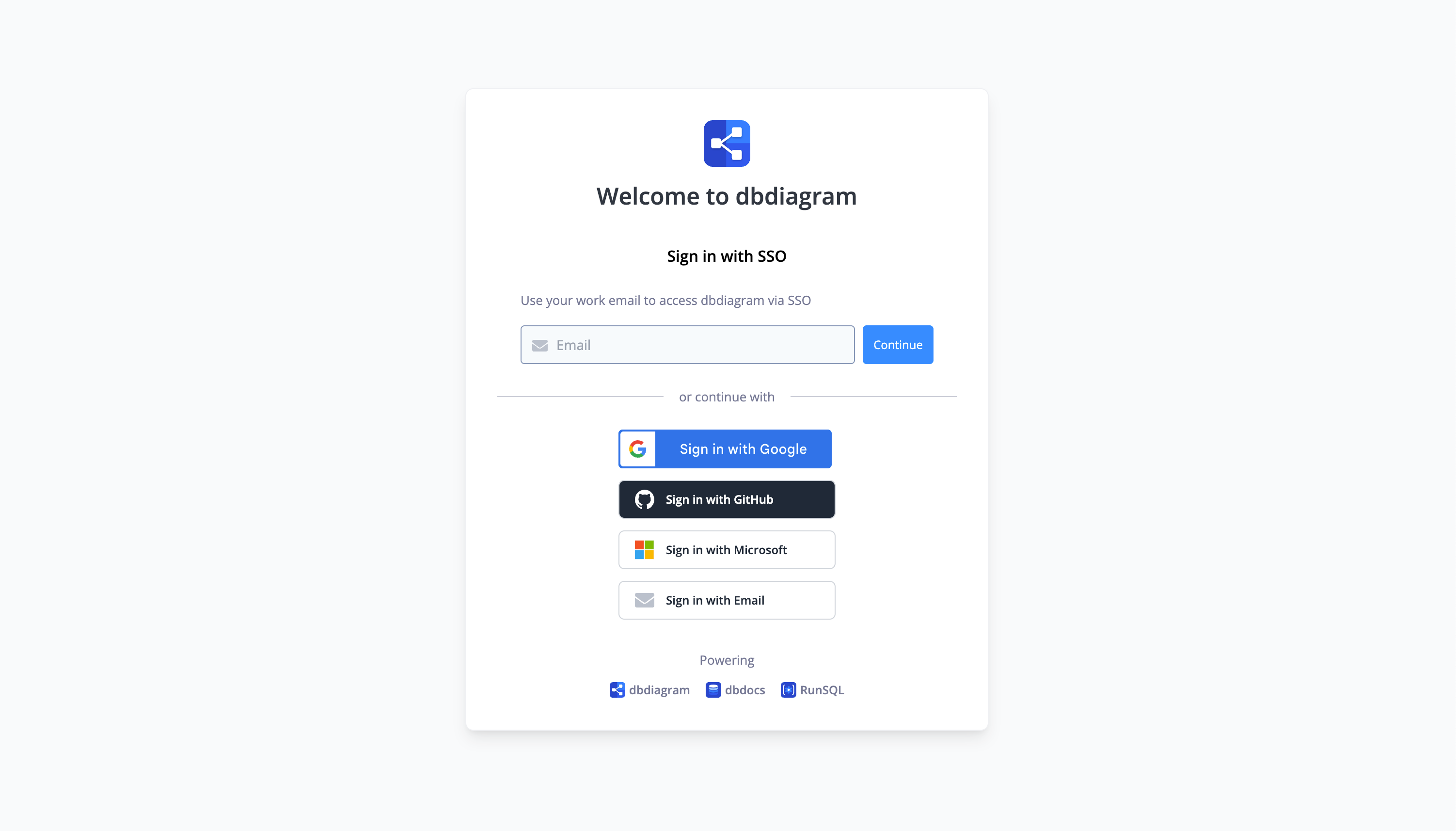

πŸ” SAML SSO Login

dbdiagram

We're excited to announce SAML Single Sign-On (SSO) support for dbdiagram!

You can now access your workspace through your organization's identity provider (like Okta) using SAML 2.0. This allows workspace admins to better manage team access and keep information more secure by centralizing authentication through a single trusted source.

To get started, simply choose the Sign in with SSO option when logging in.

Note: SAML SSO authentication is available in our Custom plan.

For detailed setup instructions, see our πŸ“š SAML SSO documentation.


πŸ€– AI Assistant Joins the Party!

dbdiagram

πŸŽ…πŸΌ Ho ho ho, database enthusiasts!

While kids are unwrapping exciting presents this Christmas, dbdiagram users aren't left outβ€”Santa's coming to town with our shiny new AI Assistant as a special present.

Imagine building or refining your database diagrams simply by chatting naturally. Whether you're creating new tables, adding relationships, or seeking suggestions for best practices like indexes and data types, just describe what you need, and it handles the rest.


Use AI Assistant now to boost your workflow, so you can wrap up early and enjoy more quality time with loved ones.

Note: The AI Assistant is included in our paid plans at no extra cost.
πŸ“š Learn more about AI Assistant in our documentation β†’

Please give this feature a try and let us know what you think.


πŸš€ Support Import from Oracle SQL

dbdiagram

You can now import your database schema directly from Oracle SQL files.

Import from Oracle SQL

Combined with our existing Export to Oracle SQL feature, you now have full import/export support for Oracle databases.

✍️ Please note that we currently support Oracle version 19c syntax, similar to our export feature.